
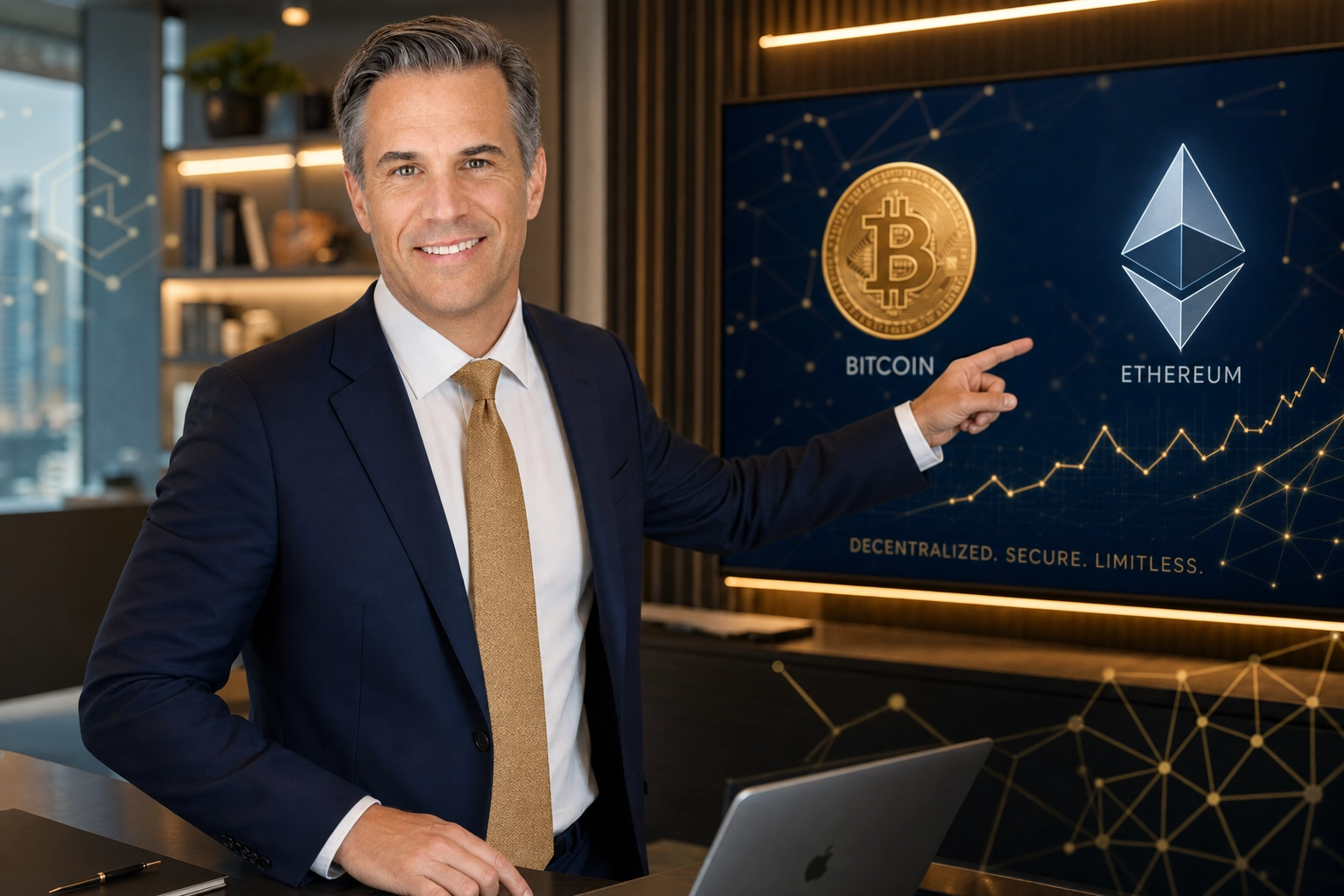
"Welcome to Lesson 1. I'm Atlas — your guide through the Investor Pathway. Before we start, let me be clear: this is education, not financial advice. My job is to make sure you understand digital assets well enough to have an informed conversation with a professional. Let's begin with the most fundamental question: what exactly is a digital asset?"
You've probably heard the terms "crypto," "Bitcoin," and "blockchain" thrown around — in the news, at dinner parties, maybe even from your kids or grandkids. And it probably feels like everyone else understands it except you.
You're not alone. Most people in your position — experienced investors, property owners, SMSF trustees — feel exactly the same way. The language is new, the concepts seem complex, and the fear of making a costly mistake is very real.
By the end of this lesson, you'll have a clear, simple understanding of what a digital asset actually is — and why it matters for your financial future.
What Exactly is a Digital Asset?
A digital asset is simply something of value that exists in digital form and is stored on a blockchain.
Think of it this way: you already own digital assets. Your online bank account balance is a digital representation of value. Your superannuation is tracked digitally. Even the shares in your investment portfolio exist as digital records.
The difference with crypto digital assets is that they use a new kind of technology — blockchain — to store and transfer value in a way that doesn't require a bank or government to manage it.
"Your property title is a record of ownership stored in a government registry. A blockchain does exactly the same thing — but for any asset, anywhere in the world, without needing a bank or government to manage the record. The concept is familiar. The technology is new."
"You already own digital assets — your bank balance, your share portfolio, your super are all digital records. Crypto digital assets use the same concept but remove the intermediary. You own the record directly, not through a bank."
"Your SMSF already holds digital records of assets — shares, managed funds, cash. Adding digital assets to your SMSF is an extension of what you already do, with a new type of underlying asset."
The Three Main Types of Digital Assets
| Type | What It Is | Simple Analogy |
|---|---|---|
| Cryptocurrencies | Digital money (e.g. Bitcoin, Ethereum) | Digital cash that works without a bank |
| Stablecoins | Crypto pegged to a real currency (e.g. $1 AUD = 1 token) | A digital version of your bank balance |
| Tokenized Assets | Real-world assets (property, gold, art) represented as digital tokens | A share certificate, but digital and instant |
"Tokenised assets are the most relevant category for you. They represent fractional ownership of real-world assets — commercial property, infrastructure, private credit — accessible for the first time at entry points that make sense for a diversified portfolio."
"The three categories — cryptocurrencies, stablecoins, tokenised assets — are not all the same risk or purpose. A small Bitcoin allocation is a very different decision from a stablecoin yield strategy or a tokenised property investment. Understanding the distinction is the first step."
"The SMSF framework is one of the most tax-advantaged structures for holding digital assets over the long term — 15% accumulation phase, 0% pension phase. Understanding what you can hold, and how to hold it compliantly, is worth your time before your next investment strategy review."
Why Should You Care?
Here's the honest answer: because the financial world is changing, and the people who understand these changes early will be positioned to benefit from them.
We are at a moment in history similar to the early days of the internet. In 1995, most people thought the internet was a fad. The people who understood it early — and positioned themselves accordingly — built generational wealth.
Digital assets are following the same pattern. And Australia, with its high adoption rate and upcoming regulatory clarity, is uniquely positioned to benefit.
"You bought property when others were sceptical — and built wealth as the market matured. The same opportunity exists in digital assets. The infrastructure is now institutional-grade. The regulatory framework is clarifying. The question is not whether to engage — it is when and how."
"What makes digital assets different from traditional investments is not just the potential return — it is the structural innovation. Blockchain-based ownership, 24/7 markets, programmable assets, and genuine scarcity are features that don't exist in traditional asset classes."
"The SMSF tidal wave — A$850 billion of SMSF assets gradually allocating to digital assets as the regulatory framework clarifies — is the structural demand driver that matters most for Australian digital asset investors. Even a 1-2% average SMSF allocation represents $8-17 billion of new demand."
What Makes Digital Assets Different from Traditional Investments?
| Feature | Traditional Assets | Digital Assets |
|---|---|---|
| Ownership | Paper certificates or bank records | Blockchain-verified, tamper-proof |
| Transfer Speed | Days (settlement) | Minutes (global) |
| Accessibility | Often requires significant capital | Fractional ownership from small amounts |
| Transparency | Opaque (you trust intermediaries) | Publicly verifiable on the blockchain |
| Hours | Business hours only | 24/7/365 |
The Key Insight: It's Not Just About Bitcoin
Most people think "crypto" means Bitcoin. But Bitcoin is just one type of digital asset — the most well-known one. The broader world of digital assets includes:
- Tokenized real estate (own a fraction of a building)
- Tokenized gold (own digital gold backed by physical bars in a vault)
- Stablecoins (send money globally in minutes for almost nothing)
- Smart contracts (automated agreements that execute without lawyers)
This is not about speculation or gambling. This is about understanding a new financial infrastructure that is being built right now — and deciding whether you want to be part of it.
★ Key Takeaways from Lesson 1
- A digital asset is something of value that exists digitally on a blockchain
- The three main types are: Cryptocurrencies, Stablecoins, and Tokenized Assets
- Digital assets are not just Bitcoin — the space is much broader
- We are in the early stages of a major financial shift, similar to the early internet
- Understanding this now puts you ahead of the majority of Australian investors
Reflect & Apply
Question 1: Think about the assets you already own — property, shares, super. How would your investment strategy change if you could own fractional shares of any asset in the world from your phone?
Question 2: What is one thing about digital assets that surprised you in this lesson? Write it down — it will help cement the learning.
Coming Up in Lesson 2 →
Now that you know what a digital asset is, the next question is: how does it actually work? In Lesson 2, we dive into Blockchain — The Trust Machine. You'll discover the technology that makes digital assets possible, and why it's being called one of the most important inventions since the internet.
"Your practical first step: read the ATO's current guidance on digital assets in SMSFs. It is publicly available and takes 20 minutes. Understanding what is already permitted — and what compliance it requires — is the foundation for any informed decision."
"Identify what percentage of your total investable assets you would be comfortable allocating to digital assets before you start researching. Having a number in mind prevents the enthusiasm of new knowledge from driving a decision larger than your actual risk tolerance."
"Check your SMSF trust deed. Does it permit investment in digital assets or cryptocurrency? If yes, you are ready to explore the compliance requirements. If not, a deed amendment is the first step — before any investment decision is made."
"Your property title is a record of ownership stored in a government registry. A blockchain does exactly the same thing — but for any asset, anywhere in the world, without needing a bank or government to manage the record. The concept is familiar. The technology is new."
"You already own digital assets — your bank balance, your share portfolio, your super are all digital records. Crypto digital assets use the same concept but remove the intermediary. You own the record directly, not through a bank."
"Your SMSF already holds digital records of assets — shares, managed funds, cash. Adding digital assets to your SMSF is an extension of what you already do, with a new type of underlying asset."
Lesson 2 is ready when you are.
General education only. Not personal financial advice.
Next Lesson → 📅 Book a Free Call