
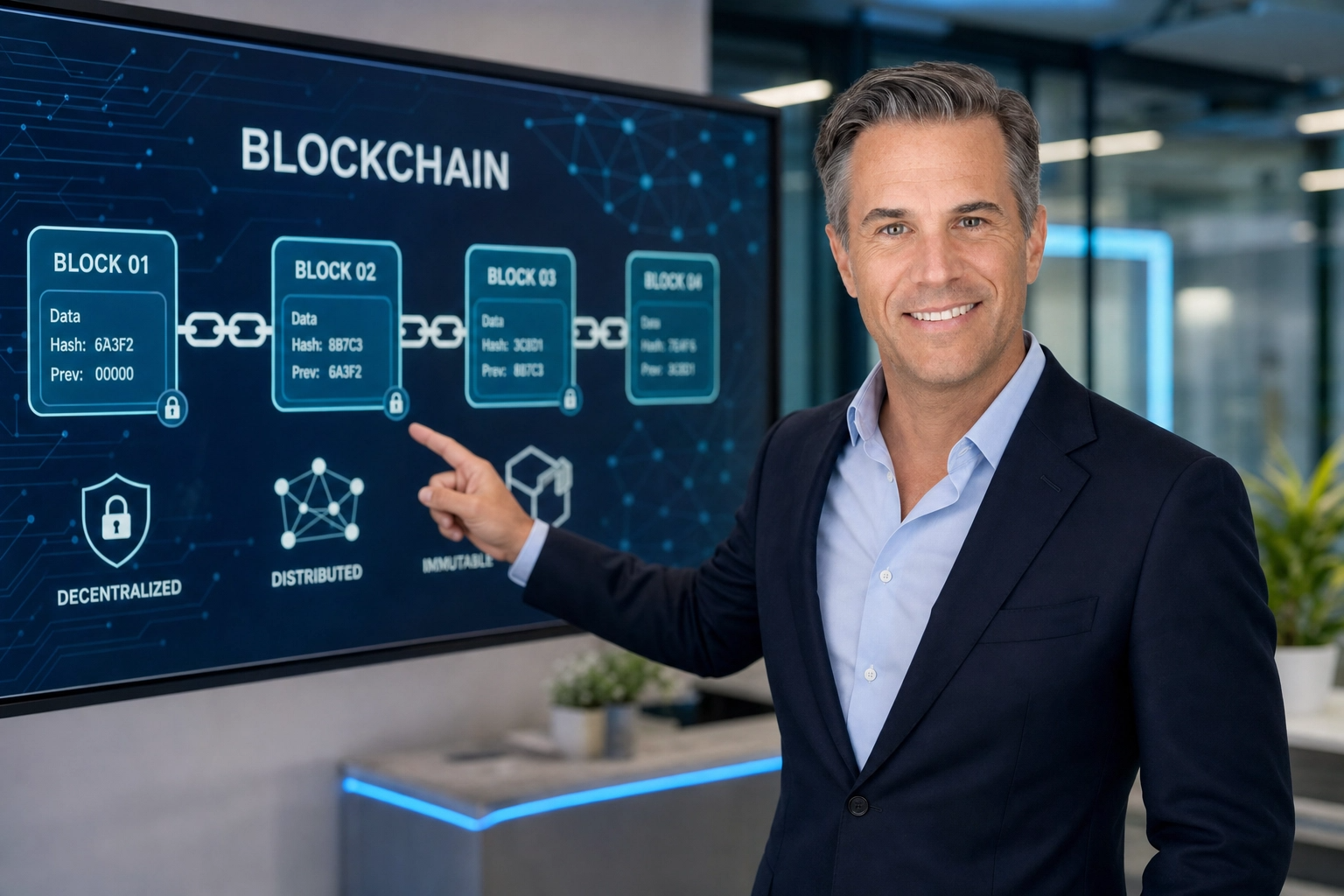
"Welcome to Lesson 11. I'm Atlas. We touched on tokenization in Lesson 3. Now let's go deeper. Tokenization isn't just a concept — it's already changing how real estate, precious metals, and infrastructure are owned and traded. This lesson explains the full picture."
The best investments have always been reserved for the wealthy. Want to invest in a commercial building in Sydney's CBD? You need millions of dollars. Want to own a piece of a Picasso painting? You need to be a billionaire. Want to invest in a private startup before it goes public? You need to be an accredited investor.
The result? The wealthy get wealthier because they have access to high-return assets. Everyone else is stuck with stocks, bonds, and savings accounts. Tokenization is breaking down those barriers.
What is Tokenization? (A Deeper Dive)
You were introduced to tokenization in Lesson 3. Now let's go deeper.
Tokenization is the process of converting ownership rights of a real-world asset into digital tokens on a blockchain. Imagine a commercial building worth $10 million divided into 10 million digital tokens at $1 each. Anyone can buy $10 worth of tokens and own a fractional share — receiving proportional rental income and capital gains.
"The property industry is one of the first to be disrupted by tokenisation. Fractional ownership of commercial property, residential developments, and infrastructure assets is already happening globally. Understanding this now means you'll be positioned ahead of the mainstream."
"Tokenisation is removing the barriers to entry for asset classes that were previously only accessible to institutional investors. Real estate, precious metals, fine art, infrastructure — all of these are being tokenised. The investment landscape is fundamentally changing."
"For your SMSF, tokenisation opens up asset classes that were previously inaccessible. A tokenised commercial property. A fraction of a gold mine. A piece of renewable energy infrastructure. These are real assets, with real underlying value, now accessible through blockchain technology."
"Tokenisation is changing how businesses raise capital. Instead of a traditional IPO or debt raise, businesses can tokenise equity or revenue streams and sell them directly to investors globally. Understanding this now gives you a strategic advantage."
What Can Be Tokenized? (Comprehensive Overview)
| Asset | Example | Your Benefit | Real Platform Today |
|---|---|---|---|
| Real Estate | $5M apartment building → 5M tokens at $1 | Invest $1,000, receive rental income proportionally | RealT, Lofty (US) |
| Fine Art | $10M Picasso → 10M tokens | Own $100 of a Picasso, benefit from appreciation | Masterworks, Maecenas |
| Precious Metals | Physical gold bars → 1 token = 1 gram | Buy $50 of gold without storing physical bars | Wealth99 |
| Private Equity | Startup raises capital via tokens | Invest in early-stage companies without millions | Various platforms |
| Intellectual Property | Music royalty rights tokenized | Fans invest in artists, earn streaming revenue share | Royal, Opulous |
| Carbon Credits | Verified carbon offsets → digital tokens | Transparent, verifiable carbon trading | Toucan Protocol |
| Bonds | Government/corporate bonds on blockchain | Faster settlement, fractional access | JPMorgan, HSBC |
"The four problems tokenisation solves — accessibility, liquidity, transparency, and efficiency — directly address the four biggest frustrations of property investing: high minimums, illiquidity, opaque transactions, and slow settlement. Tokenised property extends the opportunity set for experienced property investors."
"The $27 trillion tokenisation market projection reflects how much capital is currently locked in illiquid, access-restricted assets — real estate, infrastructure, private credit, fine art. Tokenisation democratises access to institutional-quality assets. That is the magnitude of the shift."
"Tokenised assets offer SMSF trustees institutional-quality alternative assets with secondary market liquidity. The SMSF structure's long investment horizon makes it ideal — but historical illiquidity has been a barrier. Tokenisation removes that barrier while maintaining underlying asset quality."
"For businesses, tokenisation is also a competitive consideration. If competitors are exploring tokenised equity raises, tokenised receivables financing, or tokenised supply chain settlement, understanding the technology is a strategic necessity — the businesses that understand it earliest have the most options."
Why Tokenization is Revolutionary — Four Problems Solved
1. Accessibility (Breaking Down Barriers)
Traditional: You need millions to invest in commercial real estate or fine art. Tokenized: You can invest $100 and own a fractional share. Impact: Wealth-building opportunities are no longer reserved for the ultra-rich.
2. Liquidity (Unlocking Trapped Wealth)
Traditional: Real estate and art are illiquid. It can take months or years to sell. Tokenized: Tokens can be bought and sold instantly on digital platforms. Impact: You can access your capital quickly without waiting for a buyer.
3. Transparency (Trustless Verification)
Traditional: Ownership records are opaque, stored in filing cabinets or centralised databases. Tokenized: Ownership is recorded on the blockchain — publicly verifiable and tamper-proof. Impact: No disputes over ownership.
4. Global Access (Borderless Investing)
Traditional: Investing in foreign assets is complicated, expensive, and restricted. Tokenized: Anyone, anywhere can invest in tokenized assets with an internet connection. Impact: An Australian can invest in New York real estate or London art with a few clicks.
The Market Potential: $27 Trillion by 2030
This isn't science fiction. It's happening now. According to industry forecasts, the tokenization market is expected to reach $27 trillion by 2030. Why?
- BlackRock's CEO has stated that all financial assets will eventually be tokenized
- Major financial institutions (JPMorgan, Goldman Sachs, HSBC) are already tokenizing assets
- Governments are exploring tokenized bonds and securities
- The Australian Government predicts tokenization will be a $16 trillion market
The Risks and How to Manage Them
Regulatory Uncertainty: Tokenized assets are still being regulated. Rules vary by country. Mitigation: Invest in tokenized assets on platforms that comply with local regulations.
Platform Risk: If the platform holding the tokenized assets fails, you could lose access. Mitigation: Use platforms with institutional-grade custody and regulatory oversight.
Liquidity Risk: Some tokenized assets may have low trading volume. Mitigation: Focus on tokenized assets with established markets (like gold or real estate).
Valuation Risk: The value of the underlying asset can fluctuate. Mitigation: Diversify across multiple tokenized assets.
★ Key Takeaways from Lesson 11
- Tokenization converts ownership rights of real-world assets into digital tokens on a blockchain
- It solves four major problems: accessibility, liquidity, transparency, and global access
- The tokenization market is forecast to reach $27 trillion by 2030
- Major institutions (BlackRock, JPMorgan, HSBC) are already tokenizing assets
- Risks can be managed by using reputable, regulated platforms with institutional-grade custody
Reflect & Apply
Question 1: If you could build a diversified portfolio of real estate, art, gold, and startups with just a few thousand dollars — how would that change your investment strategy compared to what you do today?
Question 2: Tokenization is becoming the new standard for asset ownership. What is one traditional investment you currently own that you think could benefit from being tokenized?
Coming Up in Lesson 12 →
You've explored the global opportunity. Now let's bring it home. In Lesson 12, we look at Crypto in Australia — The 2026 Opportunity. You'll discover the regulatory landscape, the SMSF tidal wave, and why Australia is uniquely positioned to lead the digital asset revolution.
"The property industry is one of the first to be disrupted by tokenisation. Fractional ownership of commercial property, residential developments, and infrastructure assets is already happening globally. Understanding this now means you'll be positioned ahead of the mainstream."
"Tokenisation is removing the barriers to entry for asset classes that were previously only accessible to institutional investors. Real estate, precious metals, fine art, infrastructure — all of these are being tokenised. The investment landscape is fundamentally changing."
"For your SMSF, tokenisation opens up asset classes that were previously inaccessible. A tokenised commercial property. A fraction of a gold mine. A piece of renewable energy infrastructure. These are real assets, with real underlying value, now accessible through blockchain technology."
"Tokenisation is changing how businesses raise capital. Instead of a traditional IPO or debt raise, businesses can tokenise equity or revenue streams and sell them directly to investors globally. Understanding this now gives you a strategic advantage."
Lesson 12 is ready when you are.
General education only. Not personal financial advice.
Next Lesson → 📅 Book a Free Call