
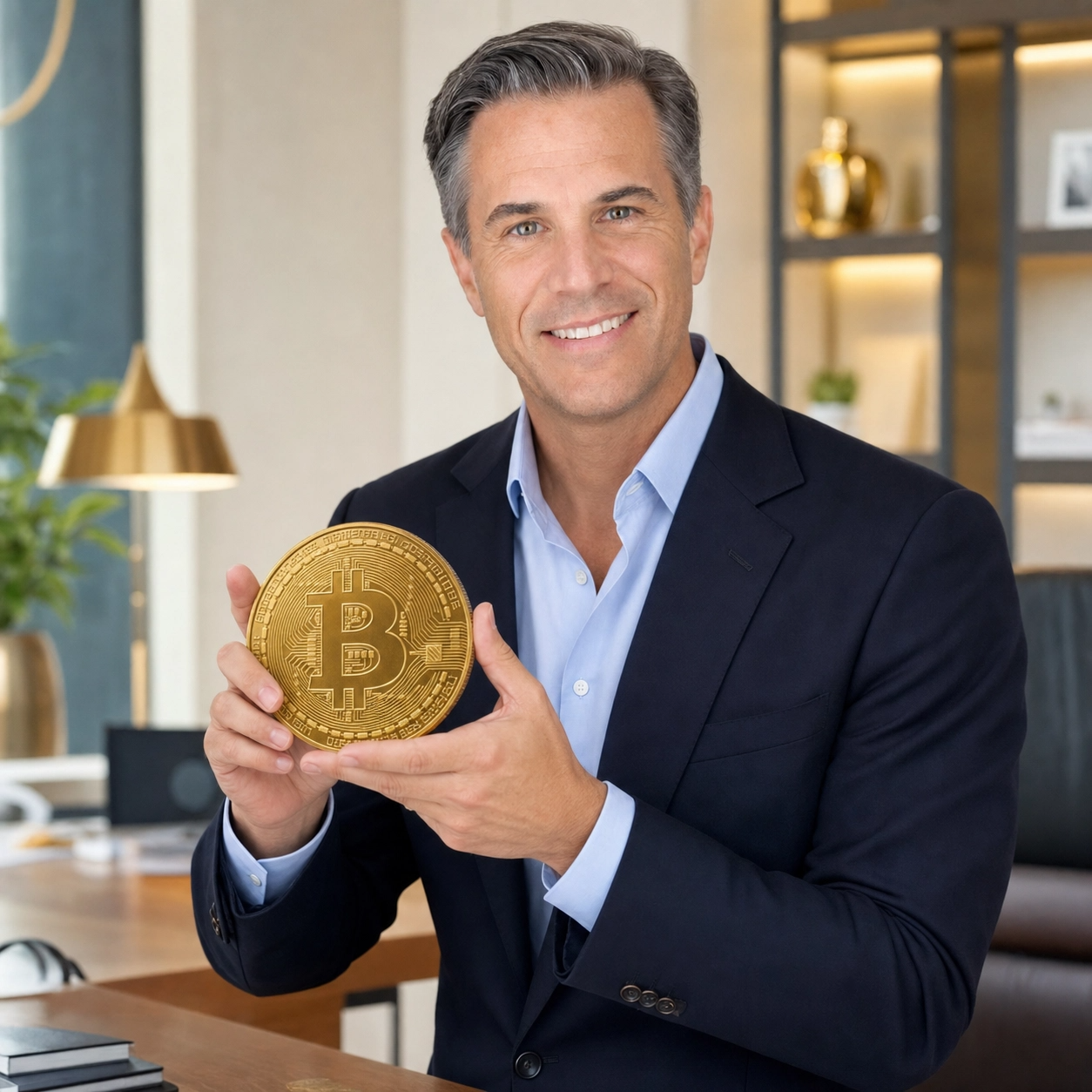
"Welcome to Lesson 3. I'm Atlas. Tokenization is one of the most important concepts for property investors to understand. It's the process that allows real-world assets — including property — to be represented on a blockchain. This lesson explains how it works and why it matters for your wealth strategy."
For decades, the most profitable investments — commercial real estate, private equity, fine art, venture capital — have been locked away behind barriers of wealth and access. You needed millions to get in the door.
Tokenization is changing that. It's creating a fairer, more open market where your ability to invest isn't determined by how much money you already have, but by your willingness to learn and participate.
What is Tokenization?
Tokenization is the process of converting ownership rights of a real-world asset into digital tokens on a blockchain.
Think of it like this: imagine you own a commercial building worth $10 million. Instead of selling the entire building to one buyer, you divide ownership into 10 million digital tokens, each representing $1 of ownership. Now, anyone can buy as little as $10 worth of tokens and own a fractional share of the building.
The building still exists in the real world. The ownership is just represented digitally on the blockchain — like turning a property deed into 10 million digital shares that can be bought, sold, and traded instantly.
"Tokenisation means you could own a fraction of a commercial building, a gold bar in Singapore, or a piece of infrastructure — from your phone, for as little as $100. The same diversification principle you apply to your property portfolio applies here, but with much lower entry points."
"Tokenisation democratises access to asset classes that were previously only available to institutional investors or high-net-worth individuals. Fractional ownership of real-world assets is now accessible to everyone."
"Tokenised precious metals — gold, silver, platinum — are particularly relevant for SMSFs. Each token is backed by real physical metal held in institutional vaults, insured, and audited. Your SMSF can hold these assets with the same compliance framework as any other SMSF investment."
"Tokenisation is changing how businesses raise capital and how assets are traded. Understanding this now means you'll be ahead of the curve when tokenisation becomes mainstream in your industry."
How Tokenization Works — Step by Step
- Identify the Asset — Real estate, art, gold, a business, intellectual property — almost anything of value
- Create a Legal Structure — A trust or company is created to hold the asset, giving token holders legal ownership rights
- Issue Tokens on the Blockchain — Digital tokens are created, each representing a fractional ownership stake
- Distribute and Trade Tokens — Tokens are sold to investors and can be traded on digital platforms like shares
- Receive Benefits — Token holders receive income or capital gains proportional to their ownership
"Tokenisation works by converting ownership rights into smart contracts on a blockchain. A tokenised property investment works like a share: a digital certificate representing your fractional stake, proportional income distributions, and the ability to sell your fraction on a secondary market without anyone's permission."
"The mechanics of tokenisation remove the biggest barriers to diversified investing: high minimum investment sizes, illiquidity, and geographic restrictions. A $1,000 minimum for a commercial property stake, immediate secondary market liquidity, and access to assets in any jurisdiction."
"Tokenised assets in an SMSF require the same compliance approach as any other digital asset: the investment must align with your trust deed, your investment strategy must document the rationale, and assets must be held by the SMSF in institutional custody — not in a personal wallet."
"Tokenisation works in two directions. As an investor, it gives you access to assets previously only available to institutional investors. As a business owner, tokenised equity is an emerging capital-raising mechanism — fractional ownership of your business offered to a global investor pool."
What Can Be Tokenized?
| Asset Type | Example | Benefit to You |
|---|---|---|
| Real Estate | $5M apartment building → 5M tokens at $1 each | Invest $1,000, receive proportional rental income |
| Fine Art | $10M Picasso → 10M tokens | Own $100 of a Picasso, benefit from appreciation |
| Precious Metals | Physical gold bars → 1 token = 1 gram of gold | Buy $50 of gold without storing physical bars |
| Private Equity | Startup raises capital via tokens | Invest in early-stage companies without being a millionaire |
| Carbon Credits | Verified carbon offsets → digital tokens | Support environmental projects, build a green portfolio |
| Luxury Goods | Rare Ferrari → fractional token ownership | Access to alternative investments previously for collectors only |
The Key Benefits of Tokenization
| Benefit | Explanation |
|---|---|
| Accessibility | Opens up investment opportunities previously only available to the ultra-wealthy |
| Liquidity | Makes it easier and faster to buy and sell assets that are traditionally hard to sell (like property or art) |
| Transparency | Ownership is tracked on the blockchain, so everyone can verify who owns what |
| Fractional Ownership | You can own a small piece of a valuable asset, rather than needing to buy the whole thing |
| Global Access | Anyone, anywhere in the world, can invest in tokenized assets (subject to local regulations) |
"The real estate tokenisation market is already live globally. As an experienced property investor, you have an analytical edge — you understand how to evaluate location, yield, and capital growth potential in a way most digital-native investors don't. That experience transfers directly to evaluating tokenised property products."
"Liquidity is the transformational benefit. Traditional alternative assets are notoriously illiquid. Tokenisation creates a secondary market where you can sell your fraction when you want, at market price, without needing a buyer for the entire asset. That is a fundamentally different risk profile."
"The superannuation liquidity requirement has historically made large illiquid property investments inappropriate for many SMSFs. Tokenised property, with secondary market liquidity, potentially changes that equation. Discuss with your financial adviser as the market matures."
"Transparency is the benefit that matters most for business relationships. Tokenised supply chain financing, receivables, and equity all operate on publicly verifiable blockchain records — reducing counterparty risk and due diligence costs for every party in the transaction."
This Is Happening Now
You might be thinking, "This sounds amazing, but is it actually real?" The answer is yes. Tokenization is already being used to:
- Sell fractional ownership in luxury real estate (platforms like RealT and Lofty in the US)
- Fund startups and small businesses
- Trade shares in rare collectibles and art (Masterworks, Maecenas)
- Issue tokenized gold backed by physical bars in secure vaults (Wealth99)
- Issue tokenized bonds by major banks including JPMorgan and HSBC
The infrastructure is being built right now. The regulations are being written. And the early adopters — people like you, who are educating themselves today — will be positioned to take advantage of this opportunity before the mainstream catches on.
★ Key Takeaways from Lesson 3
- Tokenization converts ownership rights of real-world assets into digital tokens on a blockchain
- Almost anything of value can be tokenized — property, art, gold, businesses, carbon credits
- Fractional ownership means you can invest small amounts in high-value assets
- Tokenization creates liquidity for traditionally illiquid assets like property and art
- This is not future speculation — tokenization is already happening globally right now
Reflect & Apply
Question 1: Think about one thing you wish you could have invested in 10 years ago — a piece of property, a startup, a rare asset. How would tokenization have changed your ability to access that opportunity?
Question 2: If you could own a fraction of any asset in the world right now, what would it be and why?
Coming Up in Lesson 4 →
Now that you understand what digital assets are and how they work, the big question is: Is it too late? In Lesson 4, we look at exactly where we are in the market cycle — the adoption curve, the two waves coming for Australia, and why the smart money is positioning itself right now.
"Tokenisation means you could own a fraction of a commercial building, a gold bar in Singapore, or a piece of infrastructure — from your phone, for as little as $100. The same diversification principle you apply to your property portfolio applies here, but with much lower entry points."
"Tokenisation democratises access to asset classes that were previously only available to institutional investors or high-net-worth individuals. Fractional ownership of real-world assets is now accessible to everyone."
"Tokenised precious metals — gold, silver, platinum — are particularly relevant for SMSFs. Each token is backed by real physical metal held in institutional vaults, insured, and audited. Your SMSF can hold these assets with the same compliance framework as any other SMSF investment."
"Tokenisation is changing how businesses raise capital and how assets are traded. Understanding this now means you'll be ahead of the curve when tokenisation becomes mainstream in your industry."
Lesson 4 is ready when you are.
General education only. Not personal financial advice.
Next Lesson → 📅 Book a Free Call